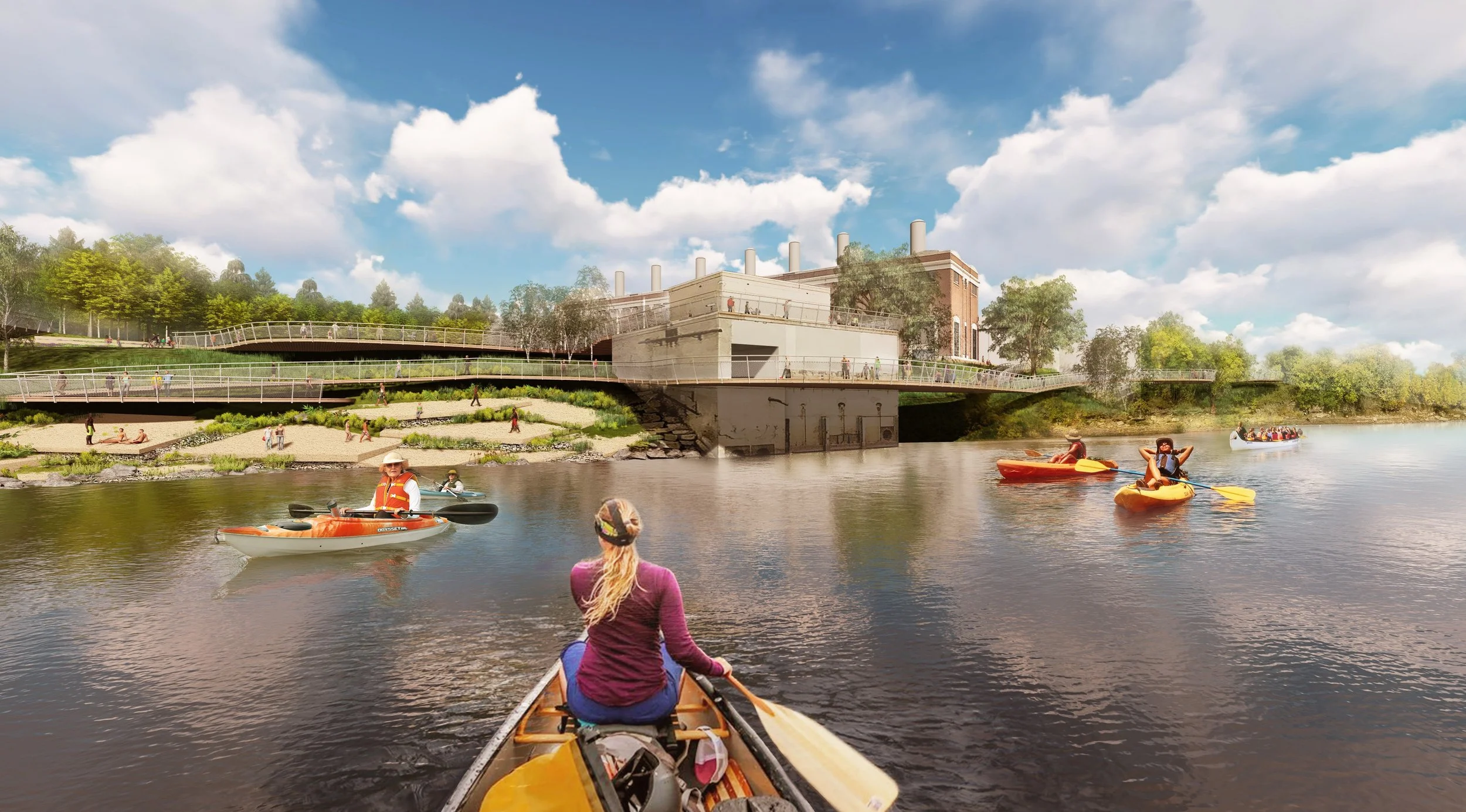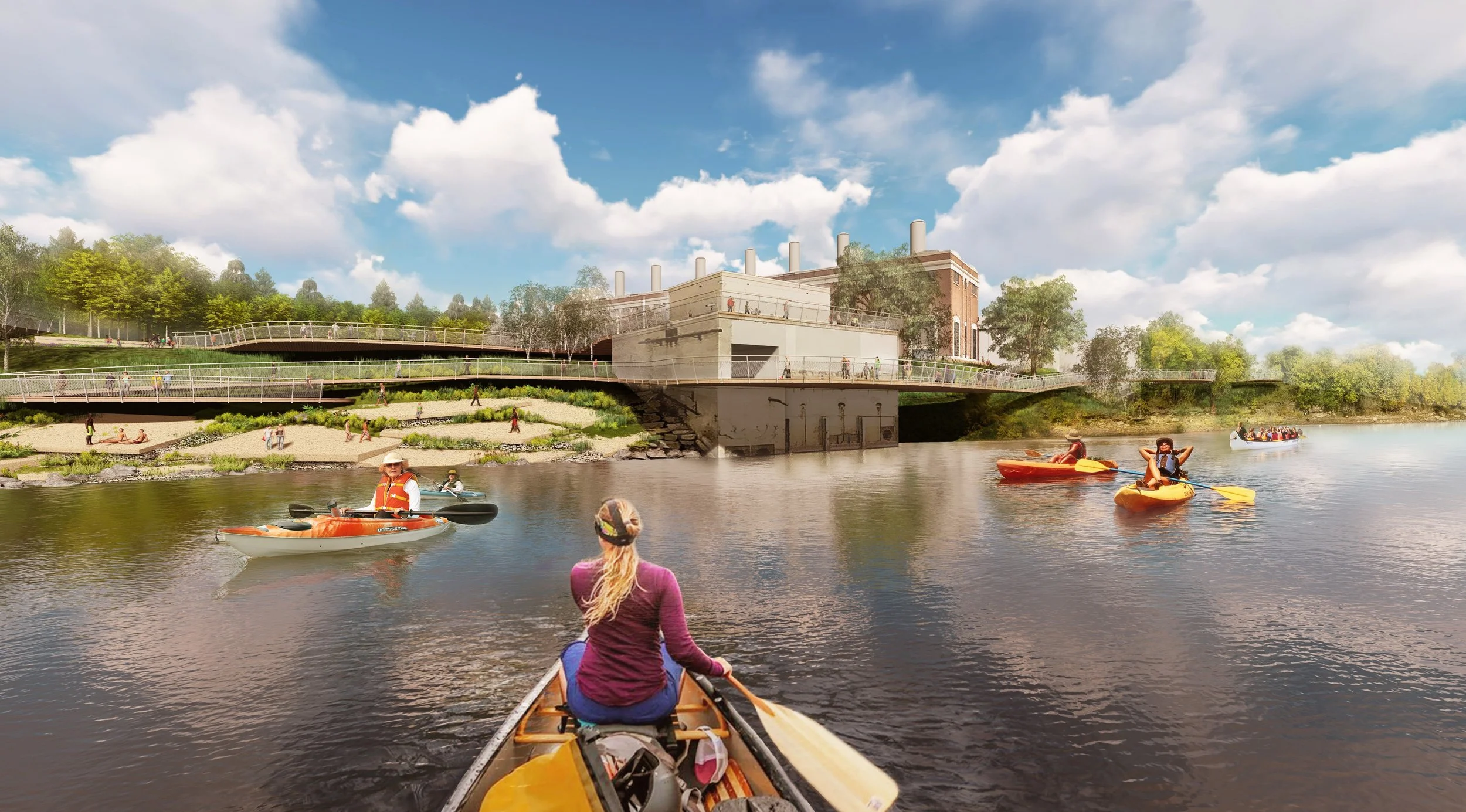
Touch the Water Promenade
Location: Edmonton, AB
Year: 2022
Status: Masterplan & Preliminary Design
Collaborators: Stoss Landscape Urbanism, ISL
Awards:
• Edmonton Urban Design Awards - Award of Excellence | Urban Design Plans (2025)
• Canadian Society of Landscape Architects | National Award of Excellence (2022)
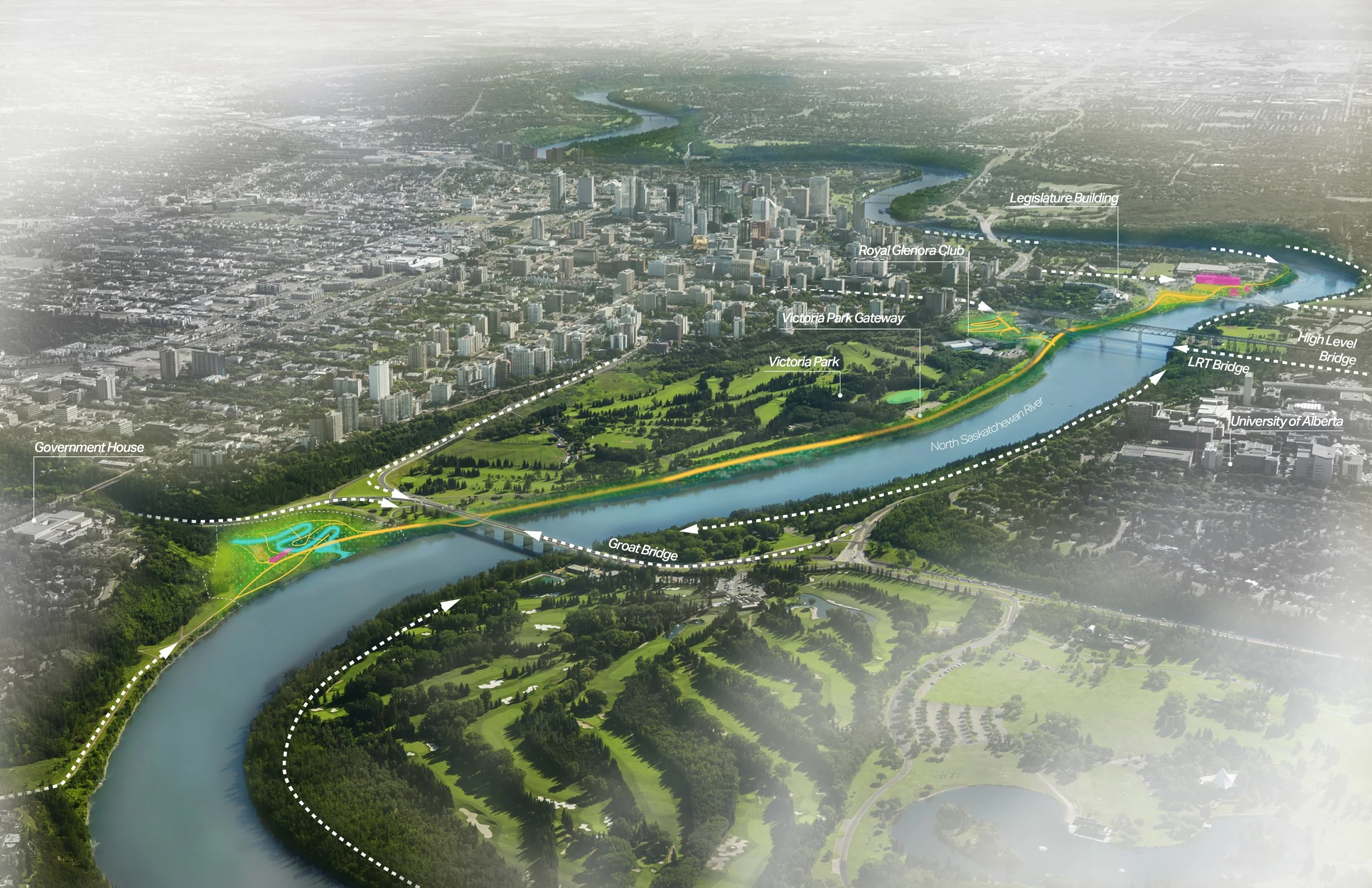
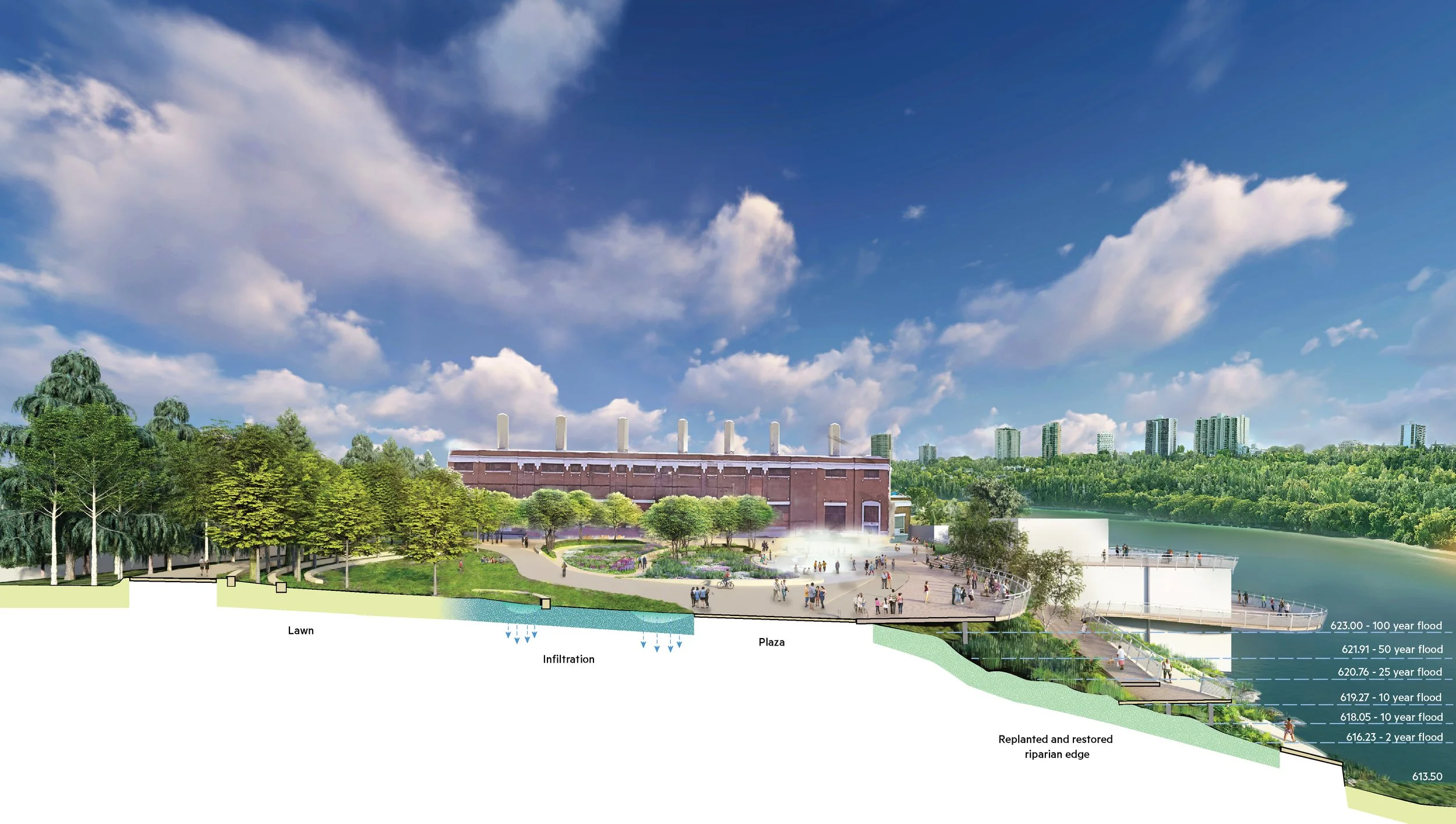
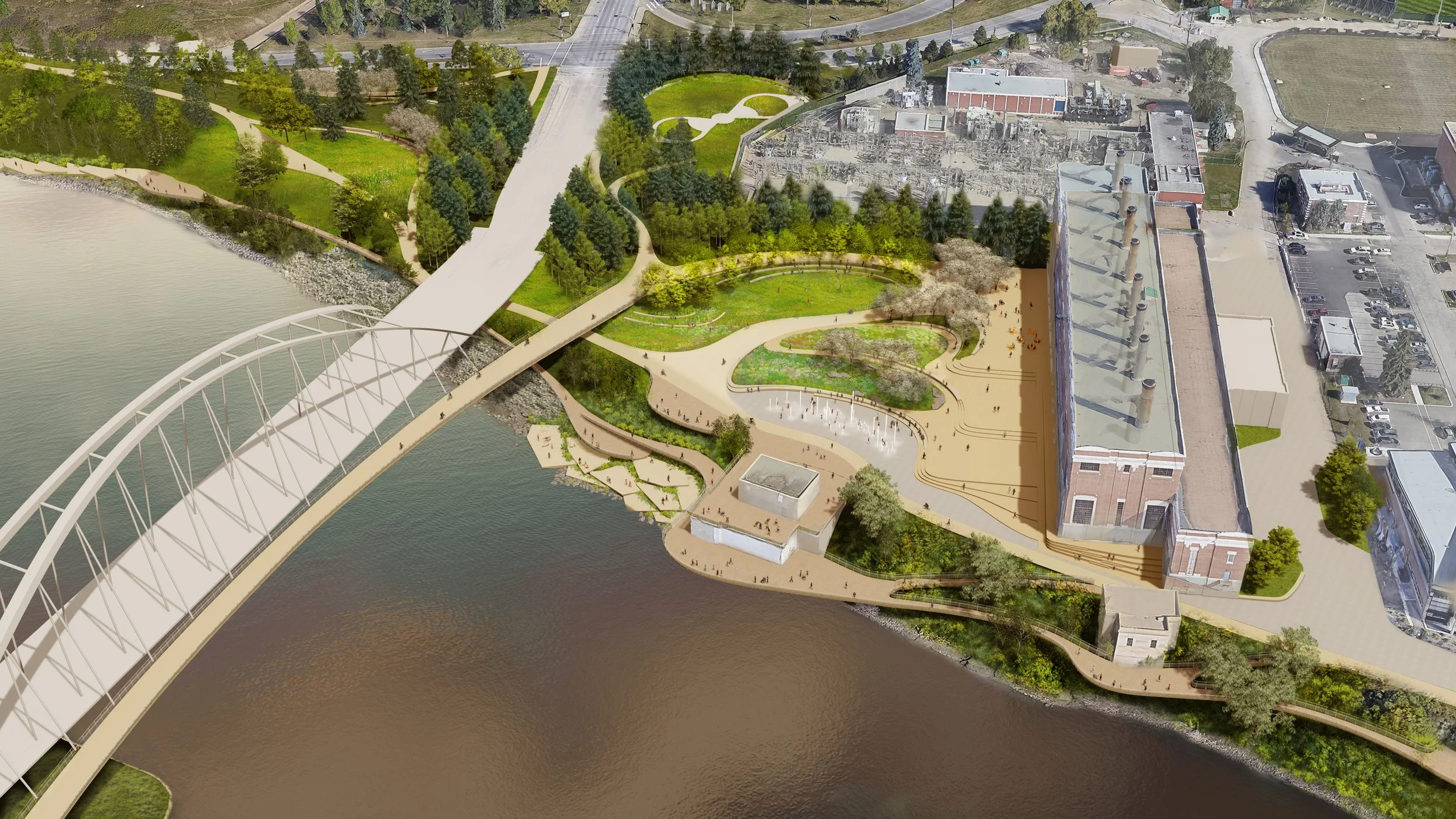
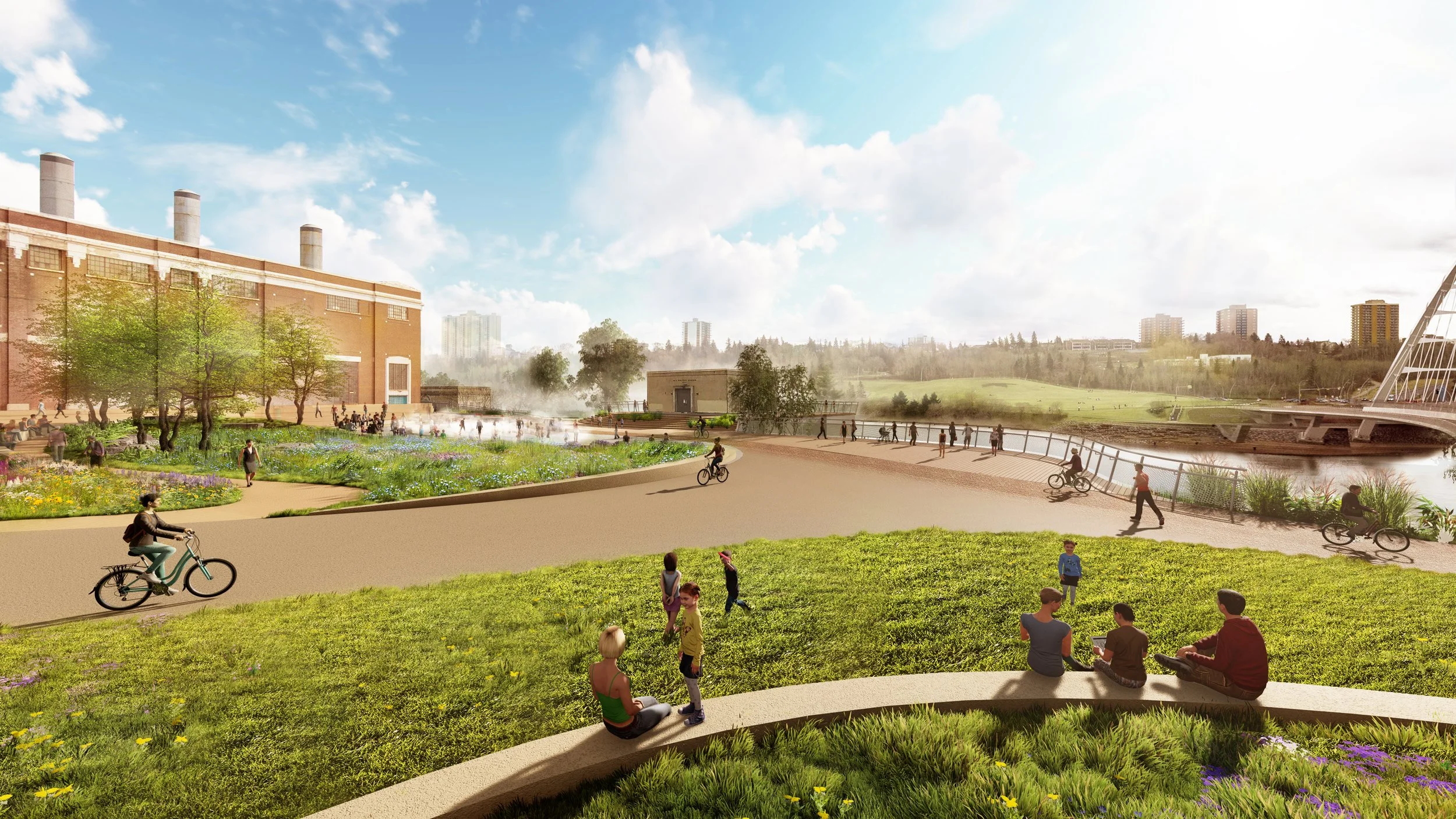
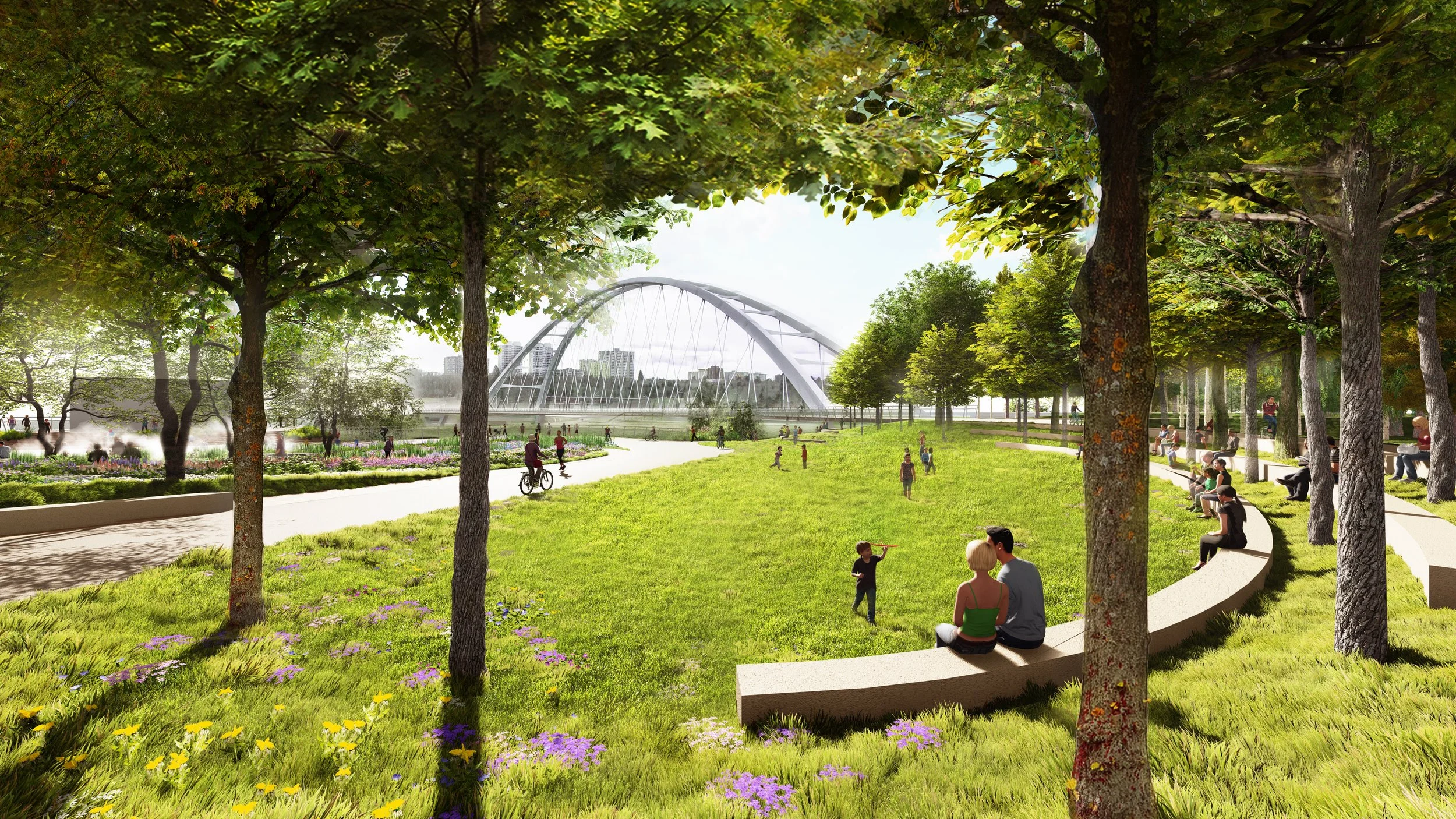
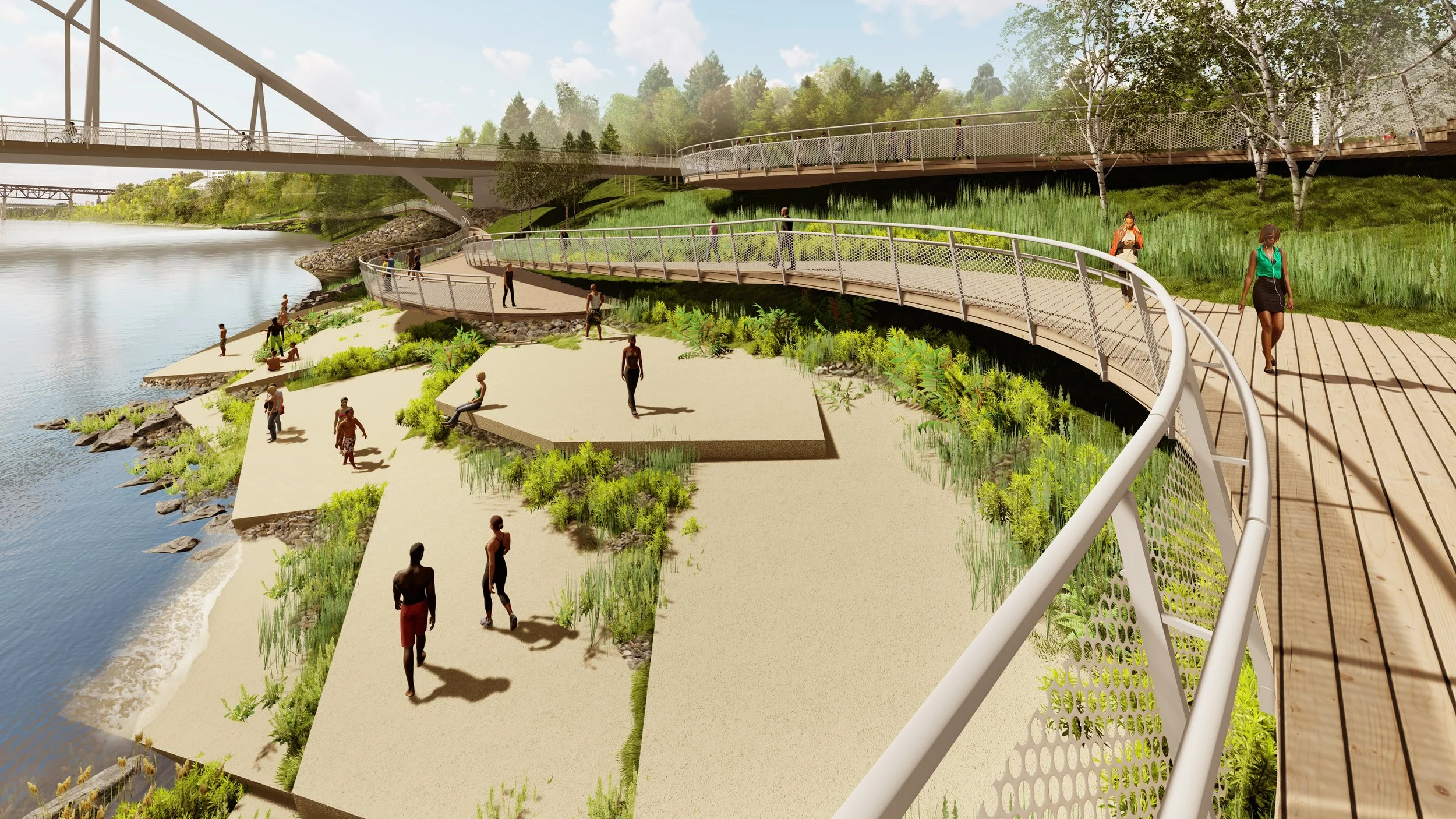
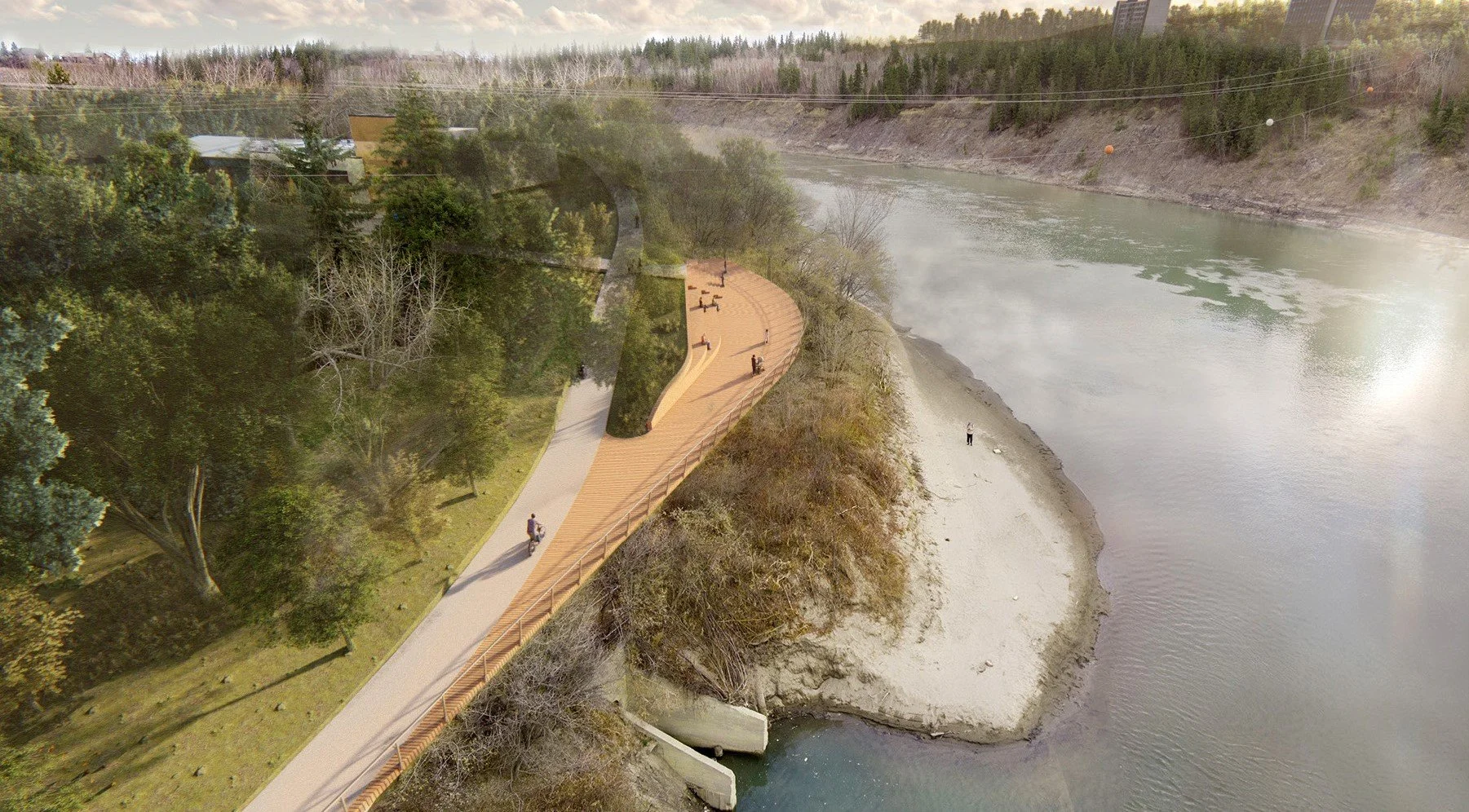
While most 21st-century riverfront redevelopments are driven by the demands of urbanization, Touch the Water Promenade is distinct: it seeks to restore and regenerate the ecology of the North Saskatchewan River Valley, while also providing new opportunities for people to experience the water’s edge and accommodating critical infrastructural functions. The plan strikes a delicate balance between the needs of wildlife and those of Edmontonians who cherish the river.
A wilderness in the heart of the city, the riverfront is essential ecologically, culturally and socially, representing an urban identity specific to Edmonton–as an Indigenous space, where gathering, hunting, fishing, and trading has occurred since time immemorial, and a former industrial space whose degradation is finally being addressed. The project responds to this layered history by preserving and enhancing existing character while inviting people to literally “touch the water.”
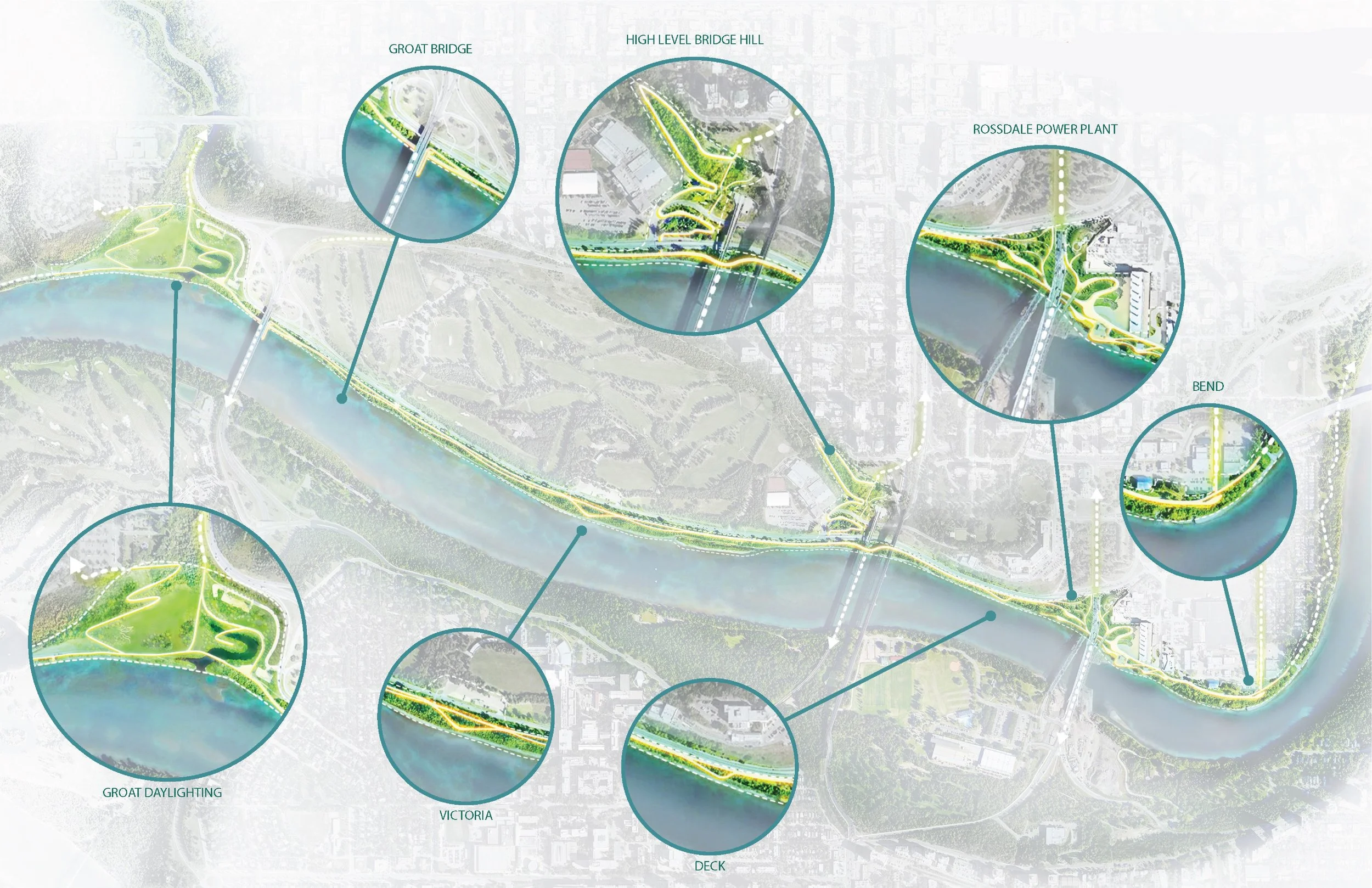
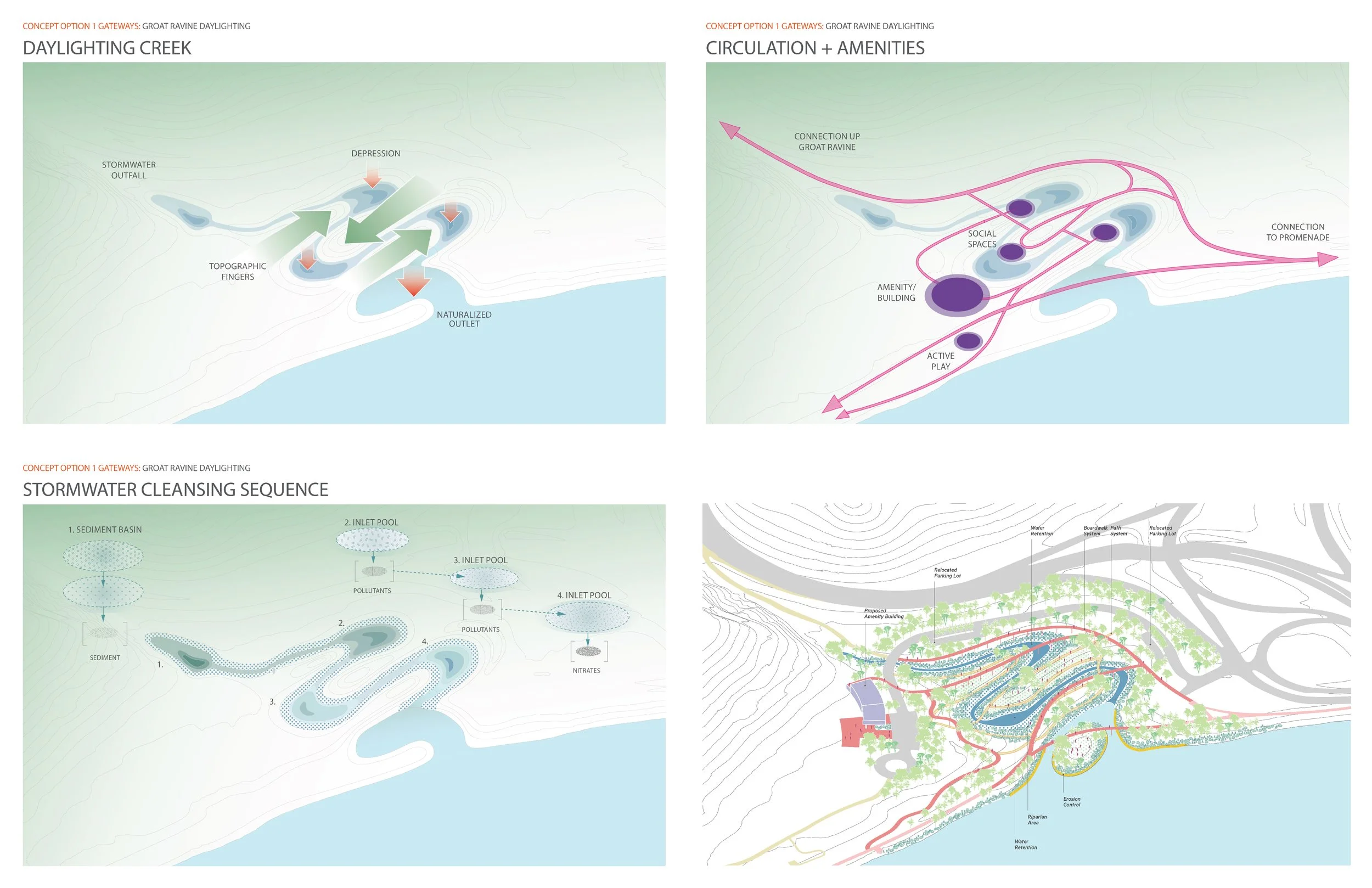
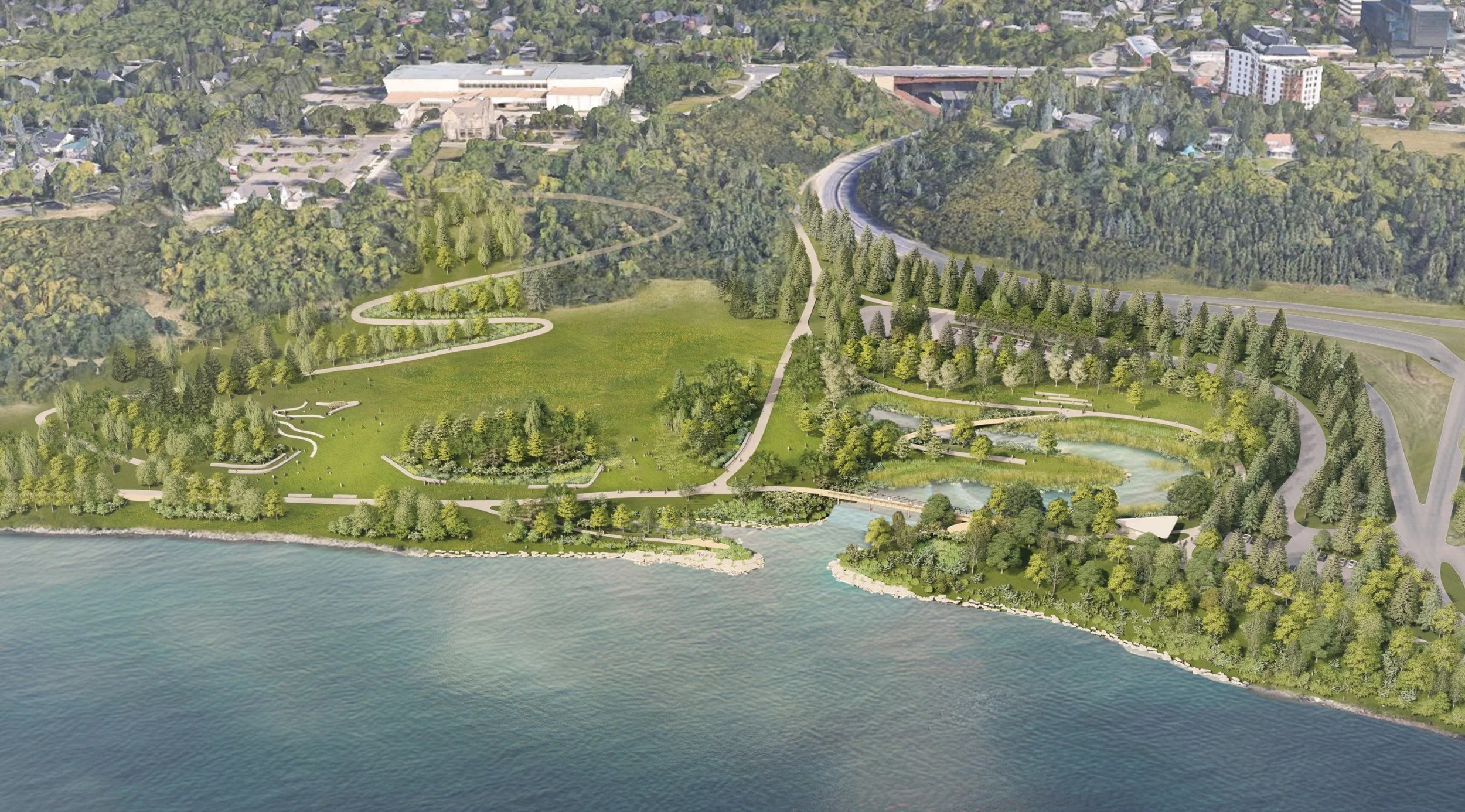
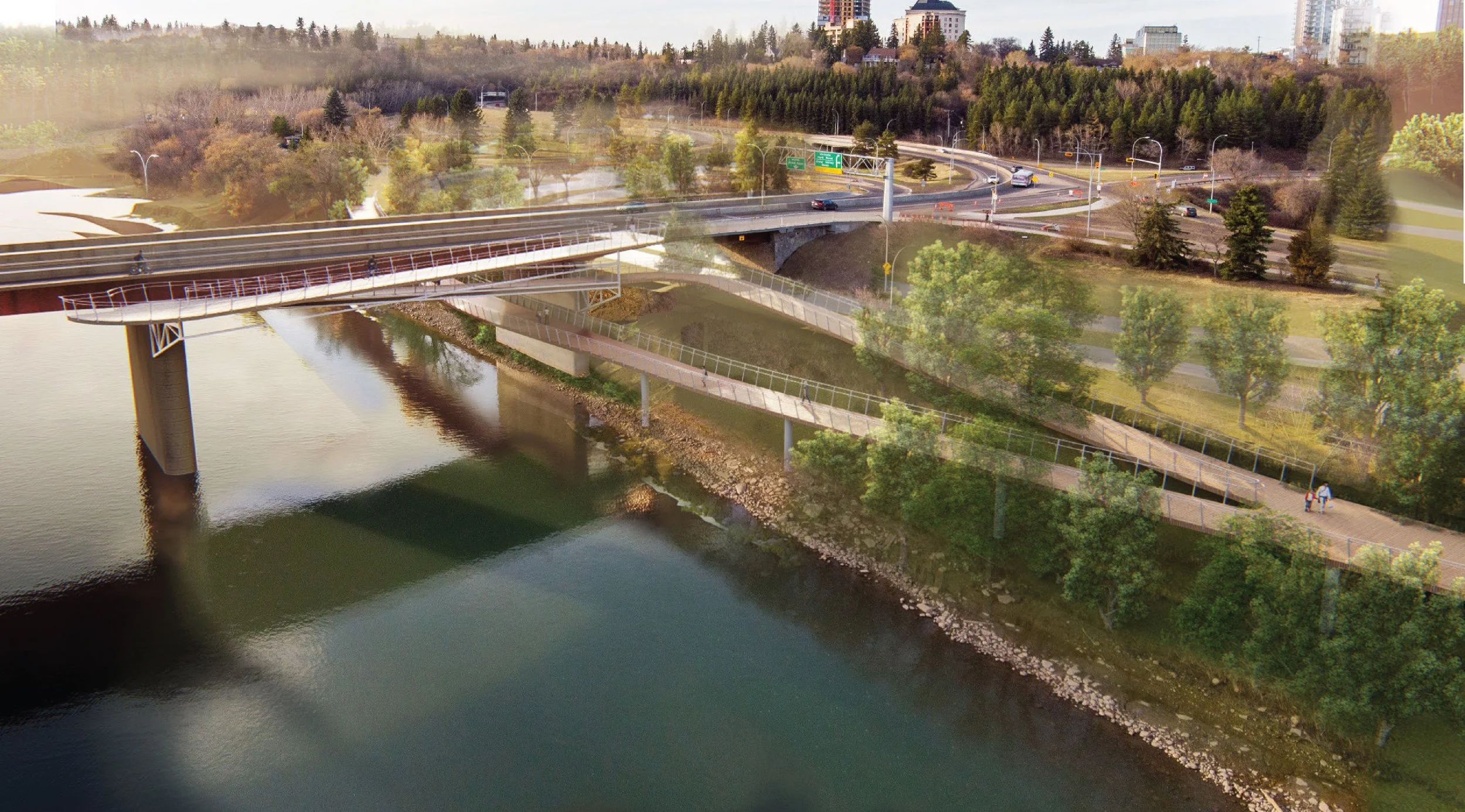
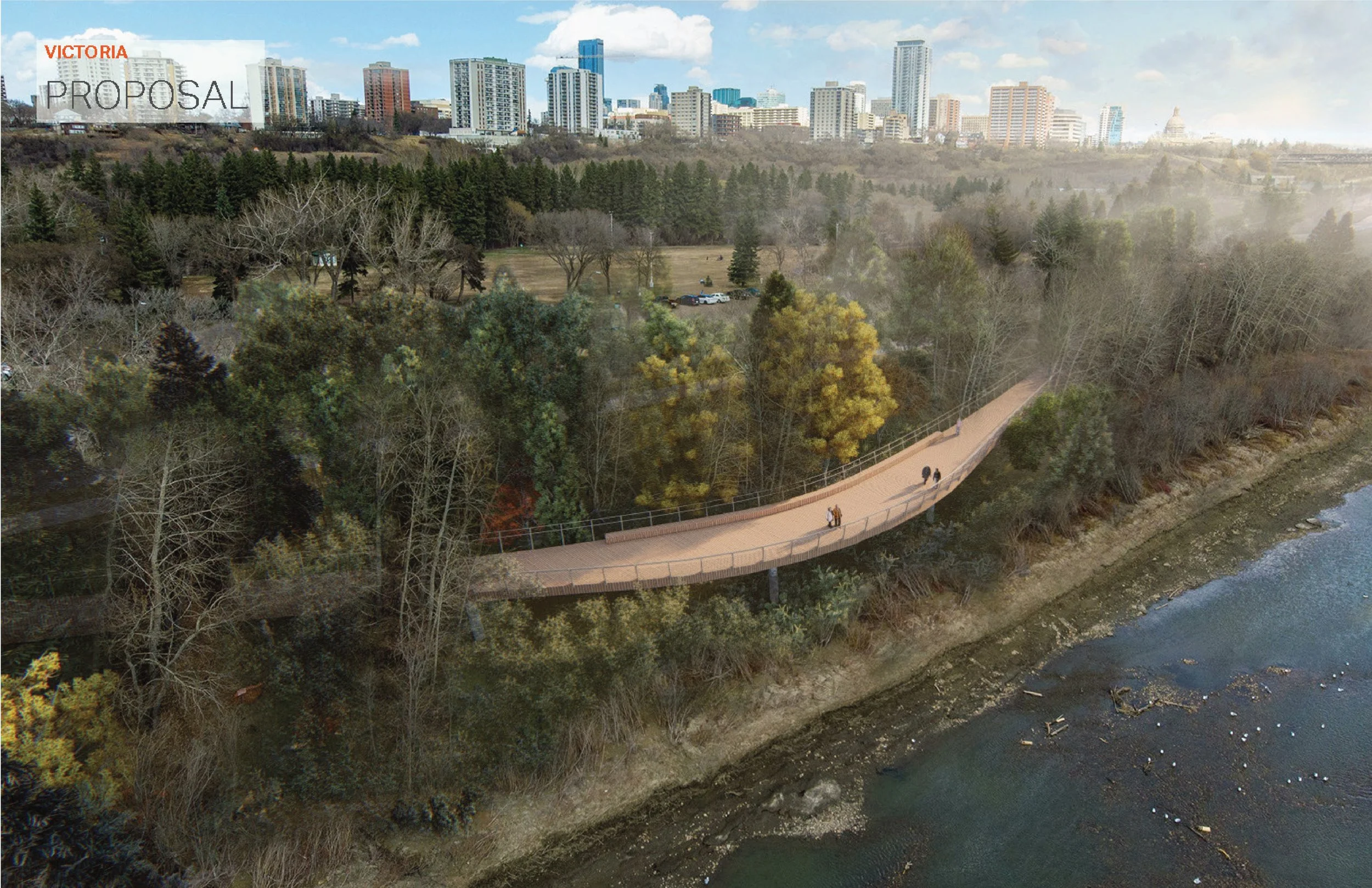
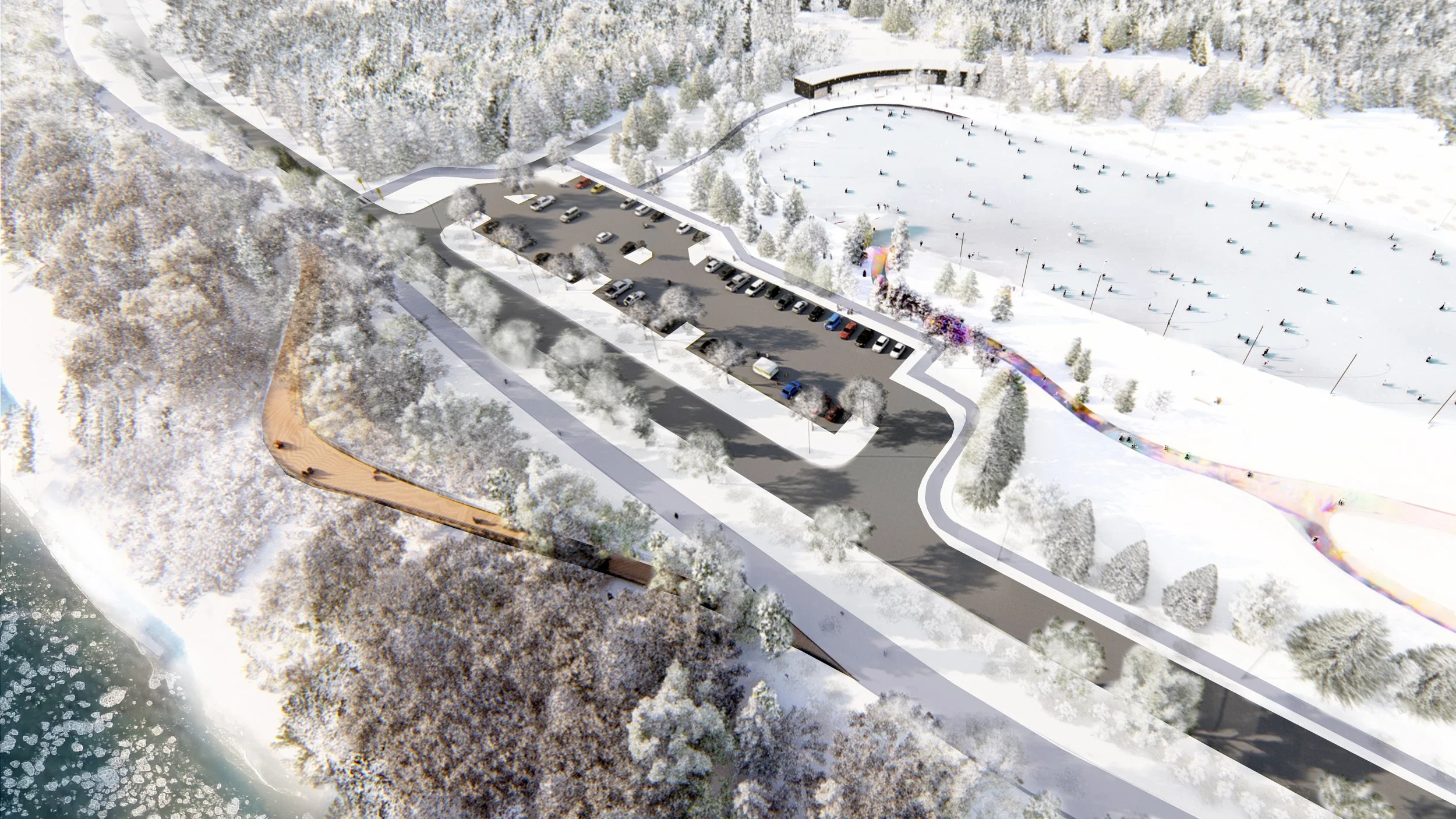
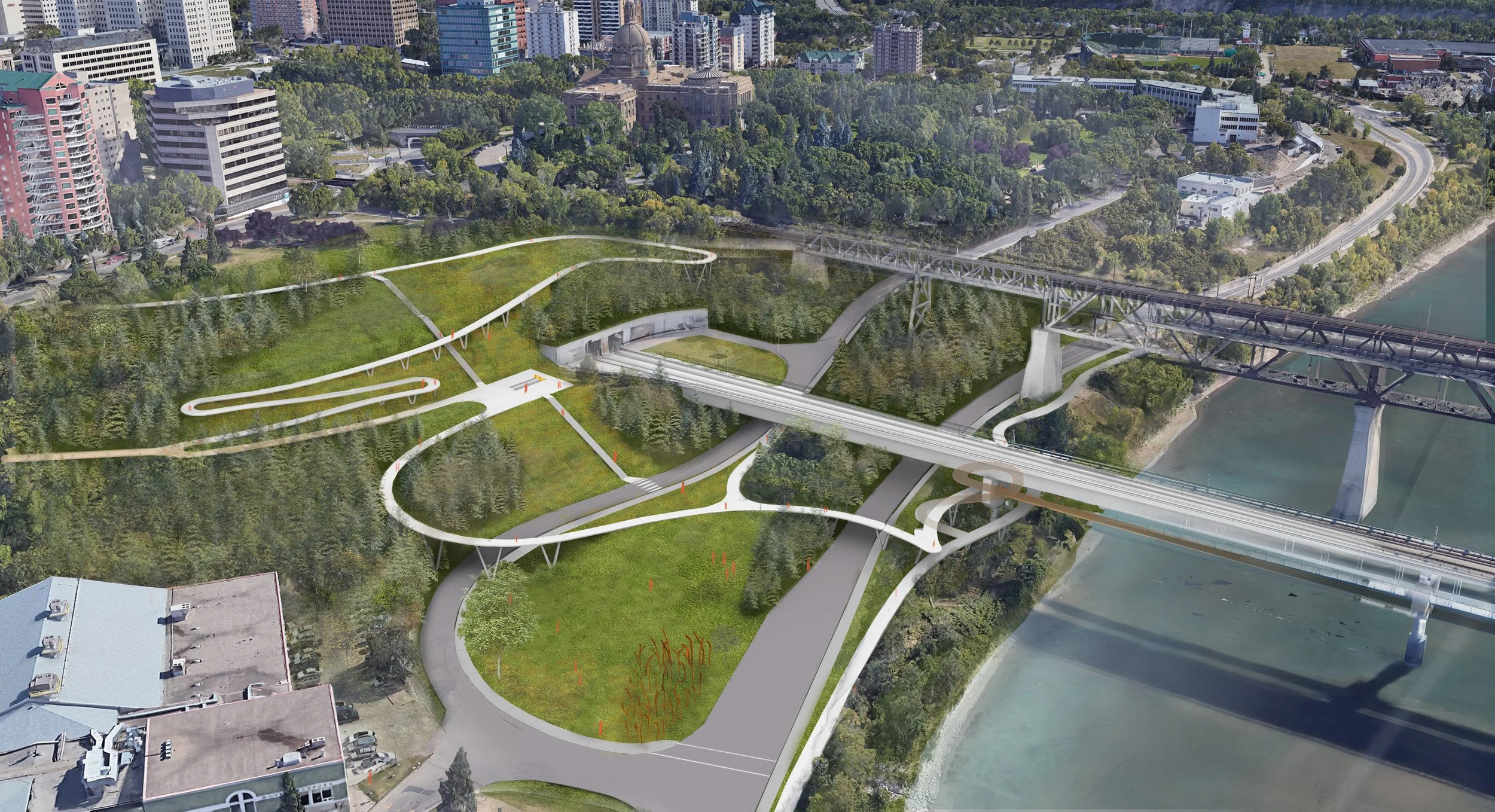
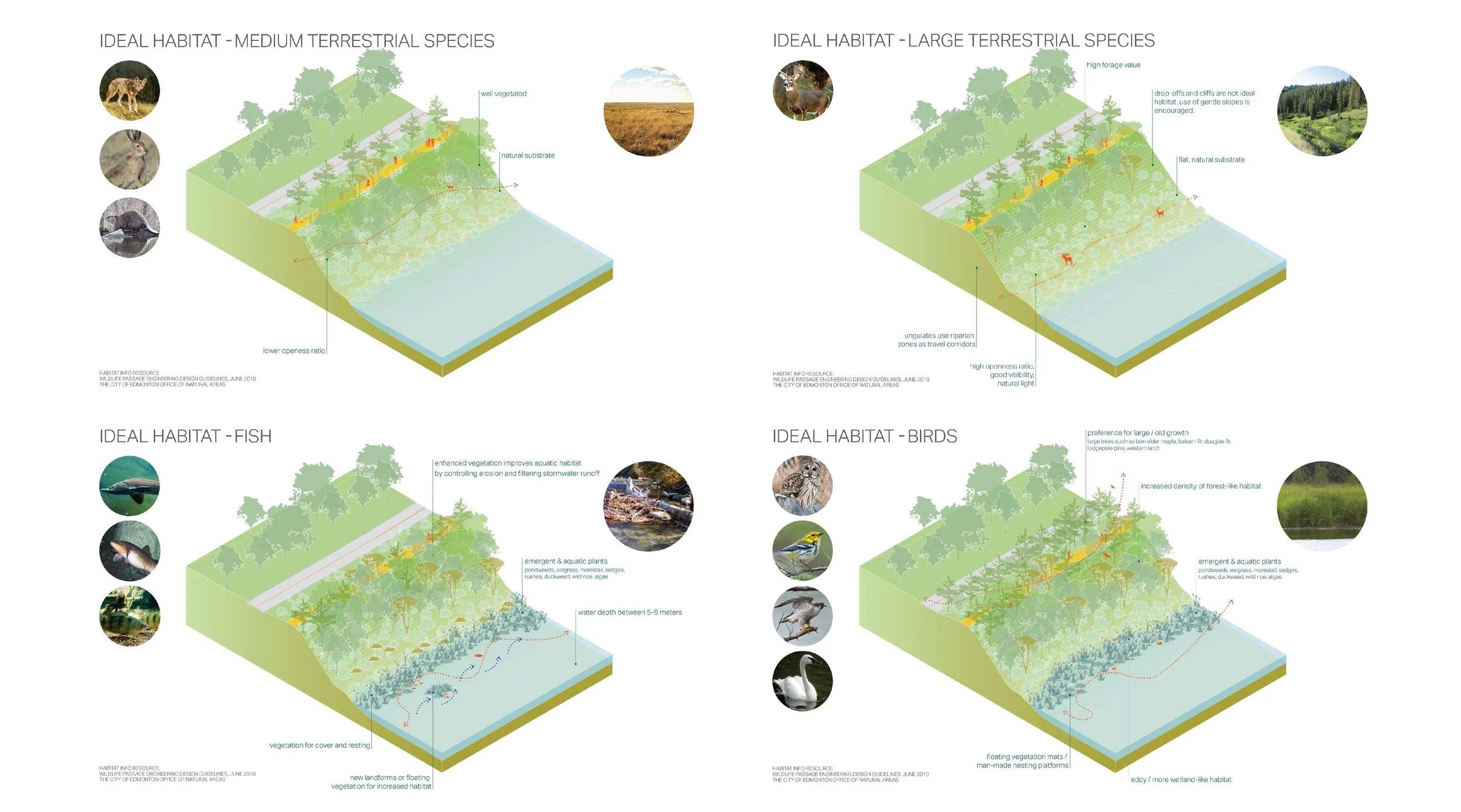
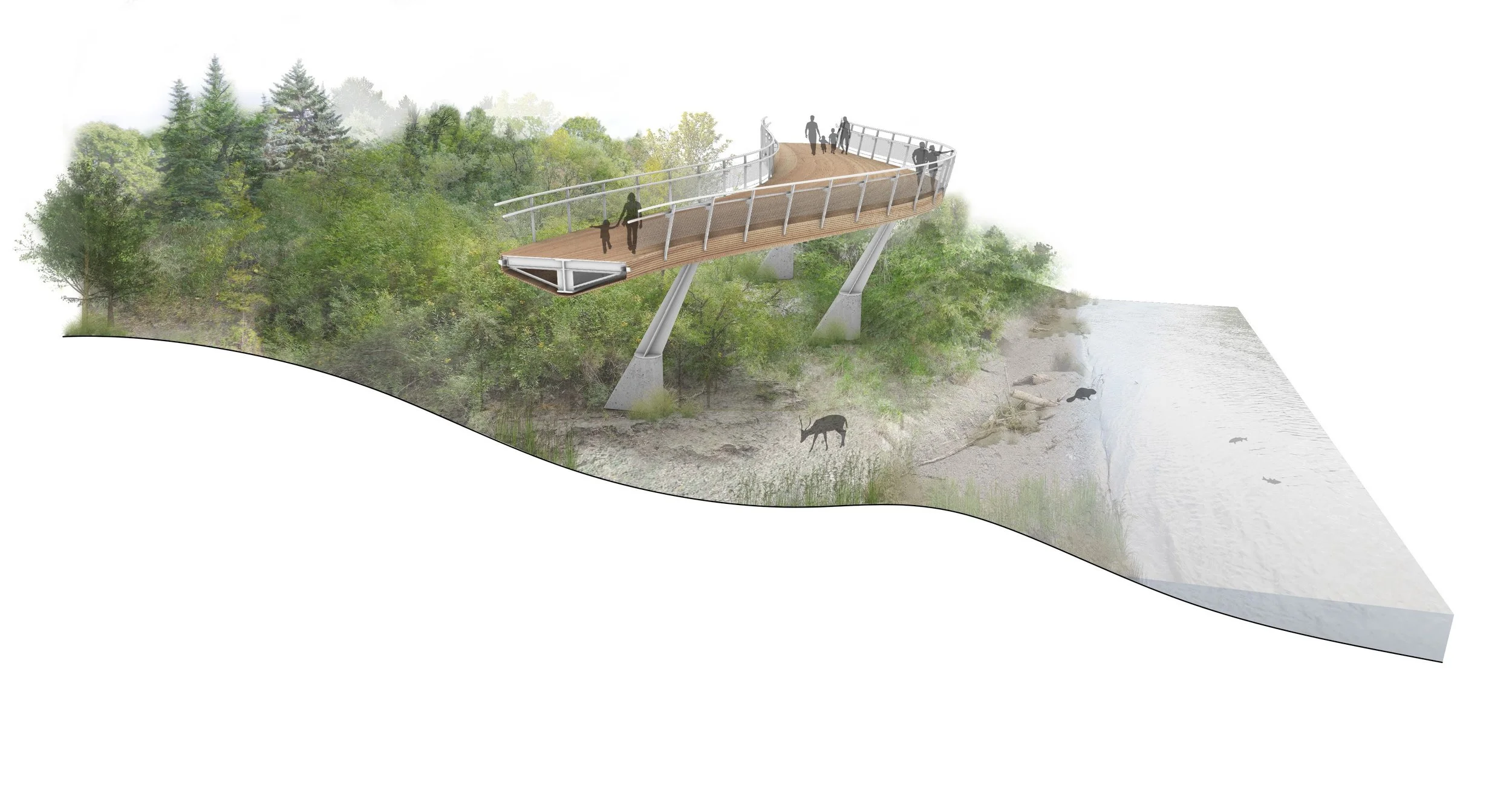
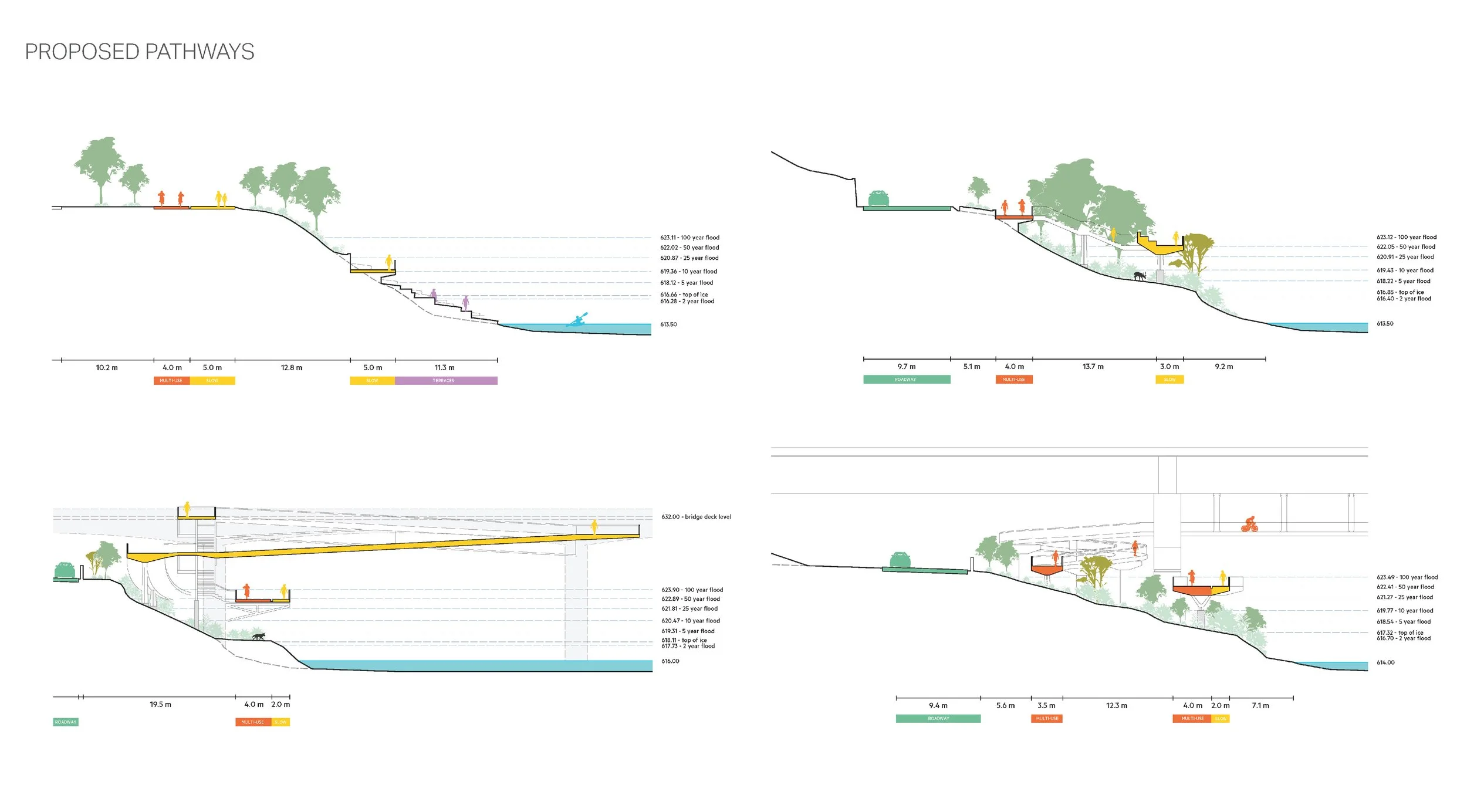
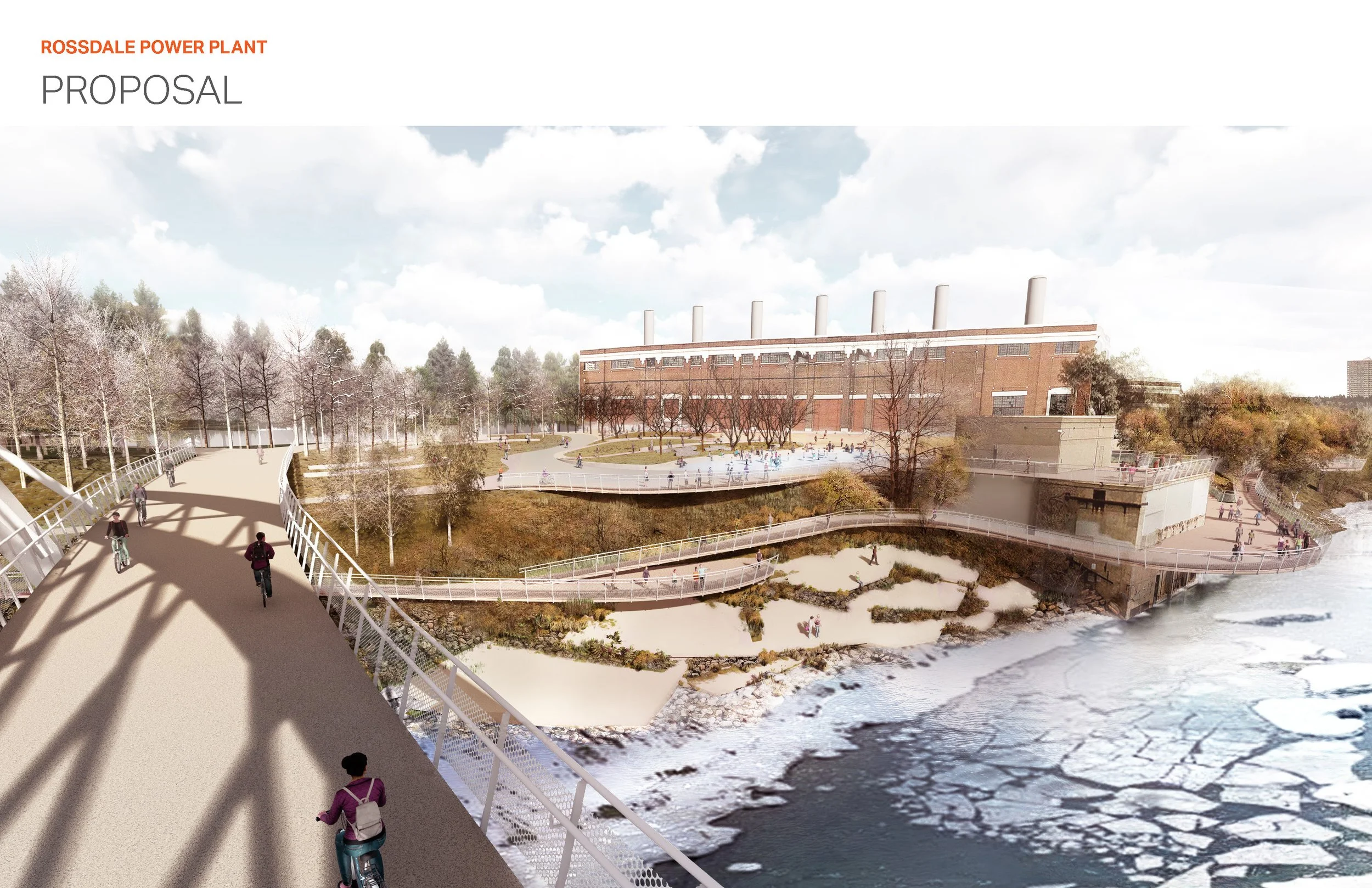
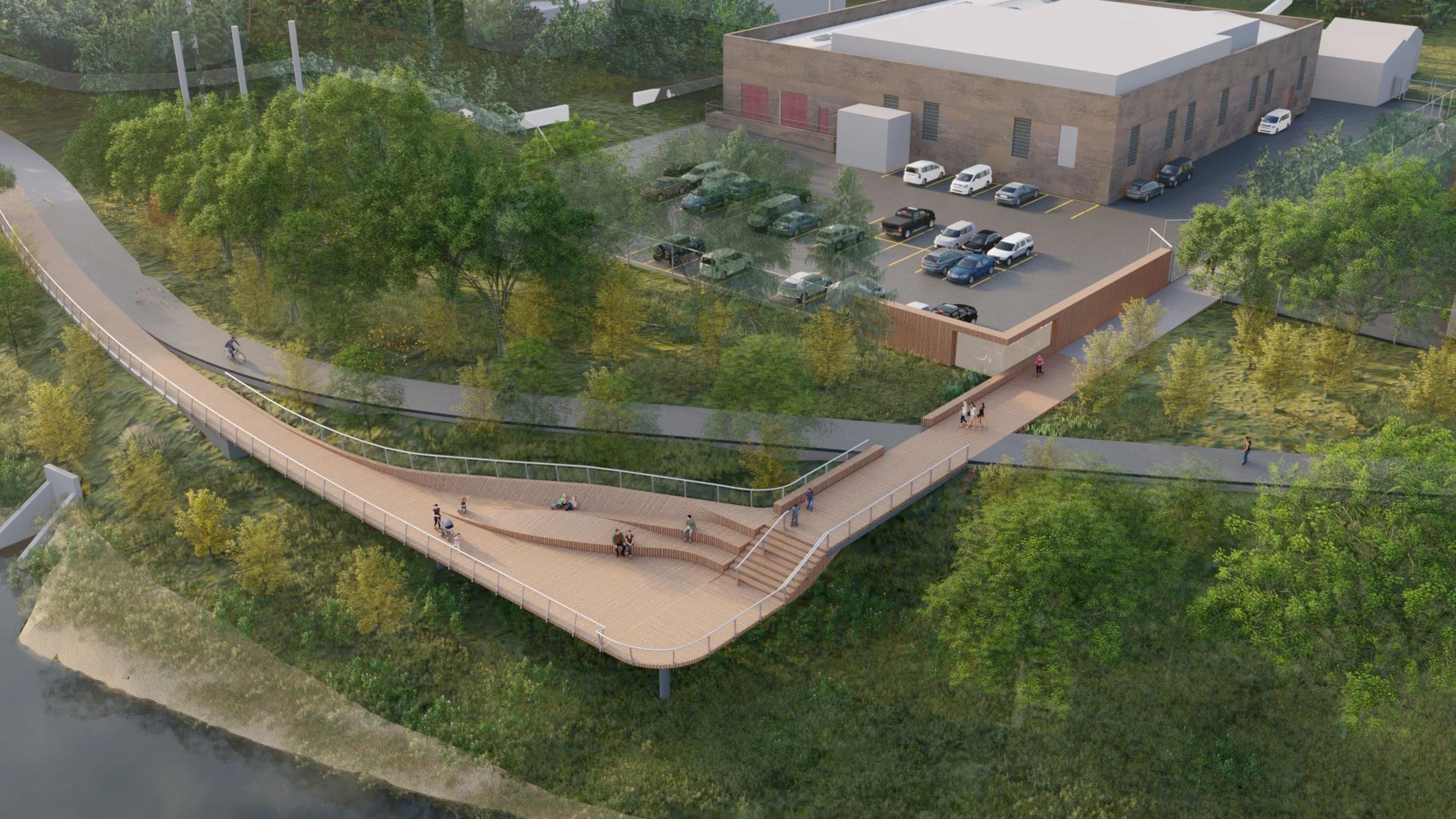
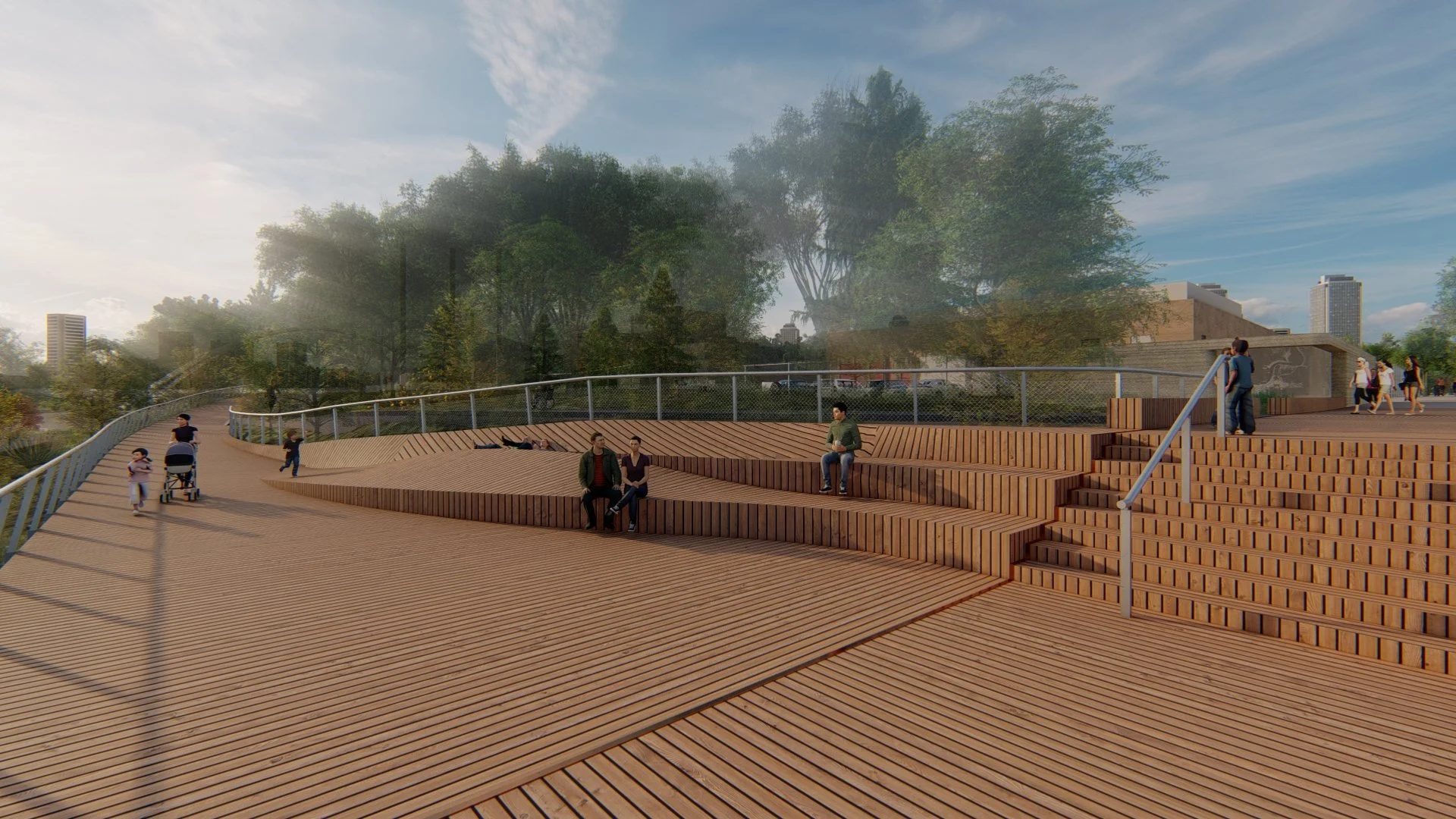
Social and ecological goals are intertwined. The resulting design solution reconnects the urban fabric to the river through a series of gateways at key nodes; navigates technical constraints including steep grade changes, variable water levels, and frequent icy conditions to provide access right at the water’s edge; and slopes the majority of pathways to accommodate visitors of varied mobilities. To bring more people into the space in a manner that is compatible with its role as a critical wildlife corridor, the circulation design takes into account not only different modes of human transit, but also different avian, terrestrial, and aquatic species. This is achieved through the selection of plant species as habitat and food sources for birds, providing unbroken corridors for the movement of larger mammals, and improving feeding and spawning conditions for fish using planting, erosion control, and a softened riparian edge.
This approach was made possible by an interdisciplinary team including fisheries biologists, environmental scientists, hydrologists, paleontologists, and archaeologists. Furthermore, engagement with Indigenous Nations and Communities as well as the general public was an essential component of the process. Elders, Community members, Knowledge Keepers, and Technicians from 26 Indigenous Nations and Communities participated in three phases of engagement.